
Fixed tooth replacement
Dental Bridges in Cornelius, NC
A missing tooth can change how you chew, speak or feel about your smile. A dental bridge replaces a tooth or several teeth in a row with an attached restoration. The right plan depends on more than the gap itself: the teeth and gums around it need to provide a dependable foundation.
Contour Dentistry offers dental bridges at our Cornelius office for patients from across the Lake Norman area. An examination helps us compare a bridge with other replacement options and explain the preparation, maintenance and costs before you decide. Call 704-896-6160 to request an appointment.
How a dental bridge replaces a missing tooth
A conventional fixed bridge has an artificial tooth that fills the empty space, joined to crowns on the neighboring teeth. Those neighboring teeth support the bridge. Once secured, a fixed bridge stays in your mouth; you do not take it out each night like a removable partial denture.
A bridge can help restore chewing and speech affected by tooth loss and help keep neighboring teeth from moving into the space. Its suitability depends on the location and size of the gap, as well as the condition of its supports. It is a replacement for missing teeth, not a treatment for underlying decay or gum disease.
Is a bridge a good fit for your mouth?
For a traditional bridge, the teeth on both sides of the gap must be able to support the restoration. An examination considers the health of those teeth, their gum support and how your upper and lower teeth meet. X-rays may be needed to assess areas that cannot be seen during the examination.
The number of missing teeth matters, but it does not decide candidacy by itself. A longer gap requires more support. Decay or active gum disease may need attention before replacement work begins, and a recently extracted tooth may require healing time before a final bridge can be fitted.
- Tell us whether the tooth was lost recently or has been missing for years.
- Describe any chewing pain, tooth movement or difficulty cleaning the area.
- Mention grinding or clenching and any problems with a previous bridge.
Compare a bridge with implants and partial dentures
A traditional bridge uses nearby teeth for support, so those teeth must be reshaped for crowns. Removing enamel is irreversible. This is an important trade-off to discuss, especially when the neighboring teeth are otherwise healthy. Supporting teeth can still develop decay or gum problems, which may compromise the bridge.
A dental implant replaces a missing tooth root and can support a replacement tooth without preparing adjacent teeth for bridge crowns. Implant treatment involves surgery and healing, and suitability depends on your health and the available support in the jaw. A removable partial denture is another option when some natural teeth remain; it is taken out for cleaning rather than secured as a fixed bridge.
There is no single best choice for every gap. We can discuss the health of your remaining teeth, your preferences about fixed versus removable treatment, daily care and the stages involved. The consultation should establish which designs are appropriate and available for your situation.
Cleaning beneath the bridge matters
The replacement tooth fills the gap, but food and plaque can still collect beneath it. Brush daily with fluoride toothpaste and clean around the supporting teeth. Use a floss threader or a suitably sized interdental brush to clean beneath the bridge each day. Ask the dental team to demonstrate how to reach that space without injuring the gums.
Keep regular dental examinations and cleanings so the bridge, supporting teeth and gums can be checked. Avoid chewing ice or other hard objects, and follow the instructions provided for temporary and final restorations. A bridge does not last forever; wear, damage or changes in its supporting teeth may eventually make repair or replacement necessary.
Getting used to a bridge and knowing when to call
A new bridge may take time to feel familiar. Follow your care instructions and let the office know if your bite feels uneven, chewing hurts or sensitivity persists. Do not assume that ongoing discomfort is something you must simply tolerate.
Contact the office if the bridge feels loose, has a visible crack or the gums around it become sore or bleed. These symptoms need assessment because the problem may involve the restoration, its supporting teeth or the surrounding gums.
Dental bridge costs and payment planning
Your estimate depends on how many teeth are being replaced, the bridge design and materials selected, and the condition of the supporting teeth. Treatment needed before bridge placement, such as addressing decay or gum disease, can also change the total. There is no single bridge price that accurately describes every treatment plan.
Ask for an individualized estimate that separates the bridge from any preparatory care and explains the planned visits. Confirm current insurance participation and bridge benefits with both the office and your insurer; coverage is not guaranteed. The Price Estimates and Insurance & Financing pages can help you prepare questions about your expected share of the cost.
If you are considering financing or the practice membership plan, ask the office about current terms and how they apply to your proposed treatment. Membership is not dental insurance. Review any financing agreement before making a decision.
What to Expect
What a conventional bridge treatment plan may involve
Assess the gap and compare options
The dentist examines the missing-tooth area, supporting teeth, gums and bite. Needed imaging and your treatment goals help guide the recommendation. Any care needed before bridge preparation is included in the discussion.
Prepare the supporting teeth
If a traditional tooth-supported bridge is selected, the neighboring teeth are reshaped for crowns. Impressions record the prepared teeth and replacement space. A temporary bridge typically protects the area while the final restoration is being made.
Check and secure the final bridge
At a later visit, the final bridge is tried in and its fit and bite are checked before it is secured. Timing varies with the design, any preliminary treatment and the production of the restoration; your plan will outline the expected sequence.
Review cleaning and follow-up
The team explains daily cleaning beneath the bridge and around its supports. Follow-up is based on your needs, including checking comfort, the bite and the health of the supporting teeth and gums.
Your Questions, Answered
Is a dental bridge the same as a crown?
No. A crown covers an existing tooth, while a bridge replaces a missing tooth or teeth. A traditional bridge includes crowns on neighboring teeth to hold the replacement tooth in place.
Can I have a bridge if the teeth beside the gap are damaged?
Possibly, but those teeth need a careful assessment. Decay, fractures or inadequate gum support may make them unsuitable as bridge supports. Treatment may be needed first, or an implant or removable replacement may be more appropriate.
Will I need more than one visit?
A conventional bridge usually involves separate preparation and placement visits, with a temporary bridge between them. An examination and any necessary preliminary care may add visits. We will discuss the expected sequence rather than promise a fixed completion date.
How do I floss a fixed bridge?
Because the replacement tooth is attached to the bridge, ordinary floss may not pass down through that area as it does between separate teeth. A floss threader can guide floss underneath, and an interdental brush may also help. Ask the team which tools and technique suit your restoration.
How long will a dental bridge last?
Longevity varies with the design, the health of the supporting teeth, your bite and daily care. Regular checkups help identify wear or problems, but a bridge may eventually need repair or replacement. No lifetime result can be promised.
Can a bridge replace several missing teeth?
A bridge may replace several teeth in a row, but longer gaps need more support. The number and location of missing teeth and the condition of the remaining teeth determine whether a bridge is suitable. An examination is needed to compare it with other replacement options.
Examples from the Practice Gallery
Original images and treatment labels are preserved. Results vary; patient-release review remains a pre-launch requirement.
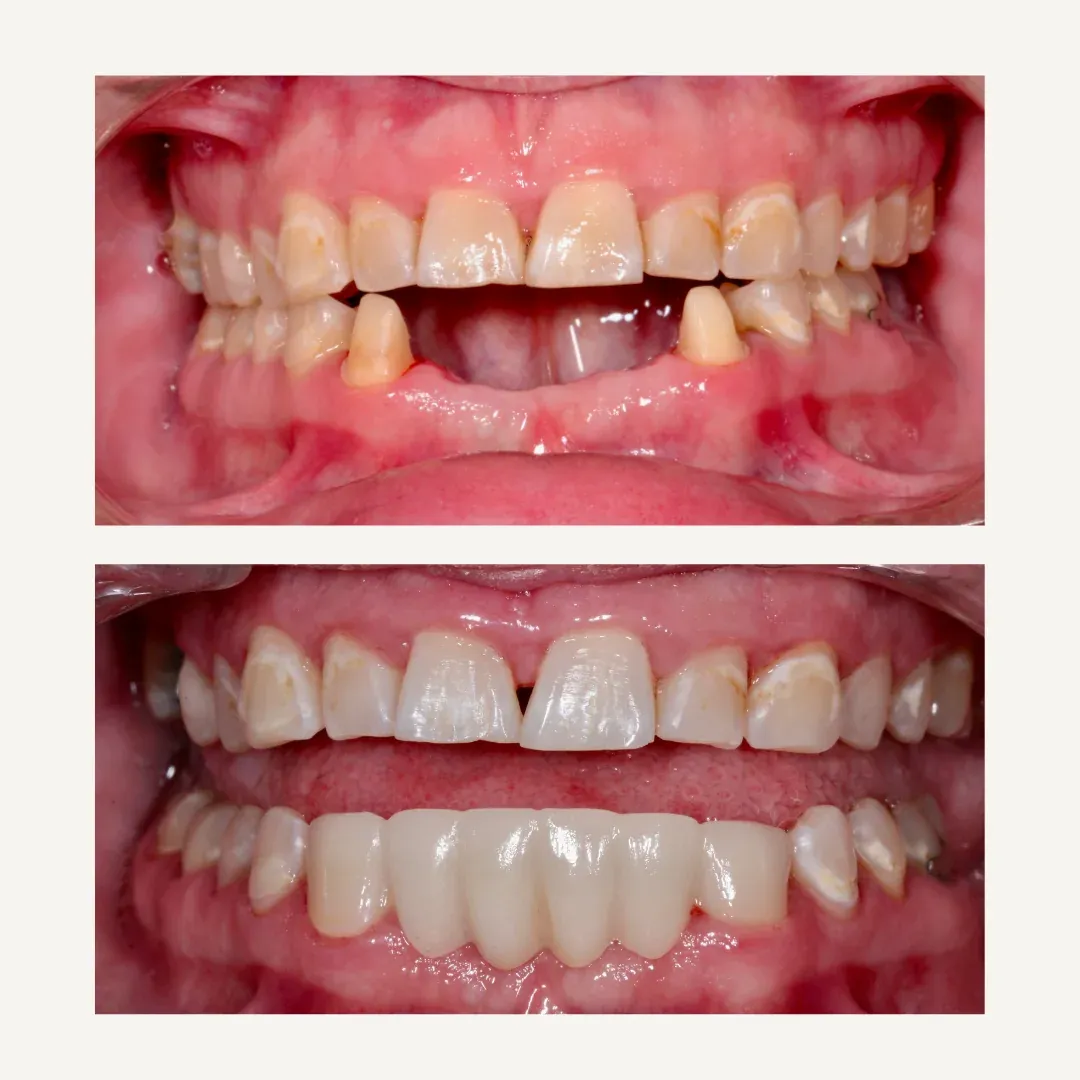
Dental Bridges
Original example from the existing Contour Dentistry gallery. Individual results vary.
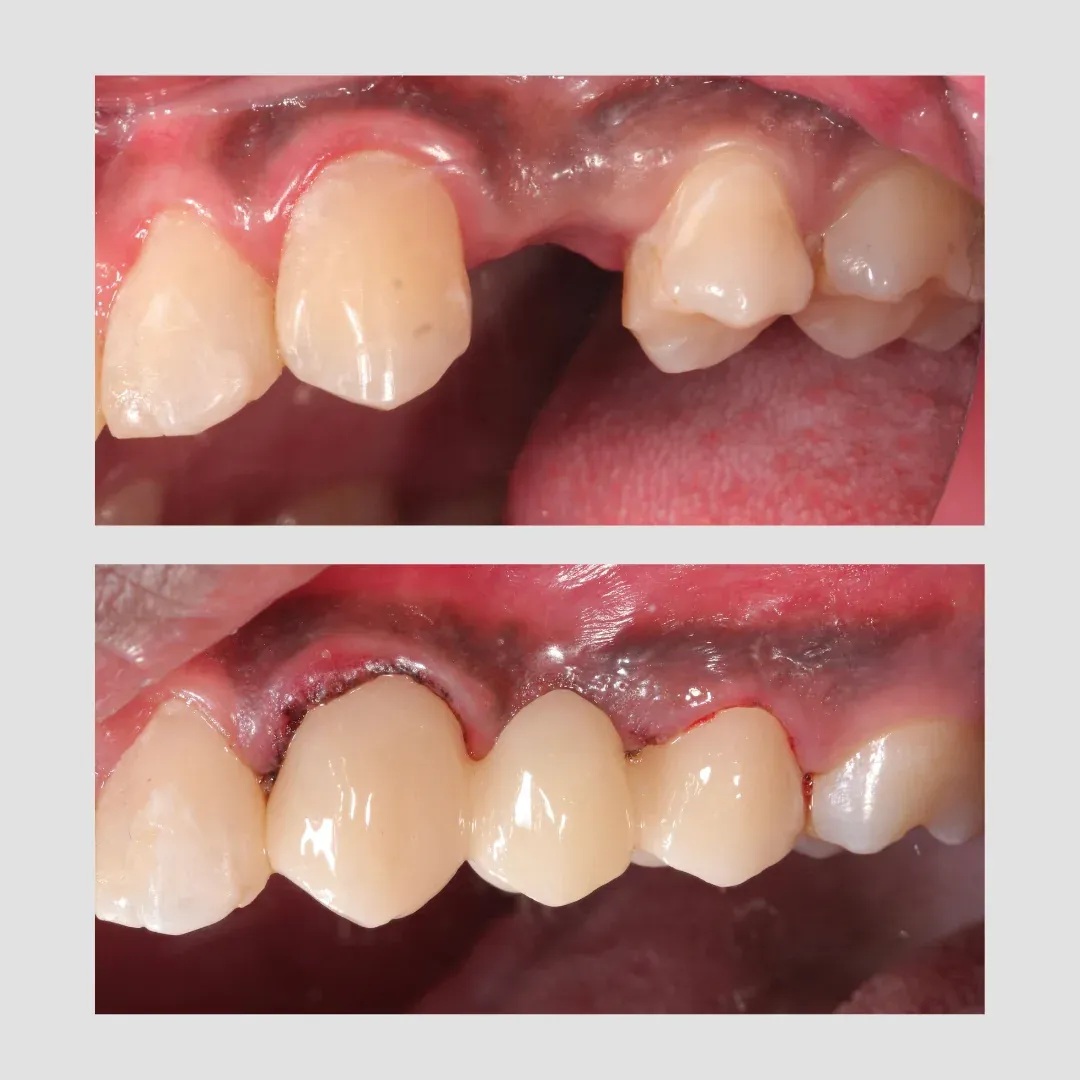
Dental Bridges
Original example from the existing Contour Dentistry gallery. Individual results vary.
Your Next Step
Let’s Talk About Your Smile
Personal dental care in Cornelius, with clear answers before treatment begins.