
Understand your tooth replacement options
Dental Implants in Cornelius, NC
A missing tooth can change how you chew and how comfortable you feel with your smile. Dental implants replace missing tooth roots and provide support for replacement teeth. Whether you have one gap or several missing teeth, the first step is understanding your oral health and the options that fit your needs.
Contour Dentistry offers dental implant evaluation and treatment planning at our Cornelius office, serving patients from surrounding Lake Norman communities. Call 704-896-6160 to request a consultation and discuss candidacy, treatment stages and an individualized estimate before making a decision.
The implant and the tooth you see are different parts
An implant is a small post placed surgically in the jawbone to act as an artificial tooth root. A connector, called an abutment, joins the implant to a replacement tooth. For a single missing tooth, that visible replacement is a crown. The implant itself remains in the jaw rather than coming out for daily cleaning.
Implants can also support replacement teeth when more than one tooth is missing. Some replacements are fixed, while certain implant-supported dentures are removable. The number and location of missing teeth, available bone and your ability to clean the restoration help determine which design is appropriate. These possibilities do not mean every configuration is right for every patient.
What determines whether an implant is a good fit?
An evaluation looks beyond the gap in your smile. Healthy gums, adequate jawbone and the ability to maintain daily oral hygiene matter. Your dental and medical history also help identify issues that could affect surgery or healing. Age alone does not decide eligibility, although jaw growth needs to be complete.
Active gum disease may need treatment before implant placement. Limited bone can change the plan, and bone grafting may be considered to build support. A graft can add another procedure and healing stage; it is not automatically necessary for every implant.
Tell the dental team about your medications, health conditions and tobacco use. Unmanaged diabetes and other conditions can interfere with healing, and smoking can slow recovery. These factors call for an individual assessment rather than a promise of approval or an automatic rejection.
- Bring an up-to-date medication list and relevant medical history to your visit.
- Mention previous gum treatment, extractions and any difficulty keeping teeth or dentures clean.
- Discuss your priorities, including chewing comfort, appearance and whether you prefer a fixed or removable replacement.
Compare implants with bridges and dentures
An implant is not the only way to replace a missing tooth. A conventional tooth-supported bridge uses neighboring teeth to support the replacement. Preparing those supporting teeth is a key consideration. A single-tooth implant can avoid that preparation, but it requires surgery and time for the bone to heal around the implant.
Traditional full or partial dentures are removable alternatives. Implant-supported dentures use implants for support, but still require a plan for cleaning and maintenance. Discuss the condition of your remaining teeth, your comfort with surgery, the treatment timeline and the overall cost. The best choice is the one that fits your health and practical needs, not simply the most complex option.
Healing happens in stages
Implant treatment usually involves several stages rather than one appointment. After placement, bone grows around the implant in a process called osseointegration. This creates support for the replacement tooth and can take several months. Feeling better after surgery does not necessarily mean the implant is ready for normal chewing forces.
Swelling, bruising, minor bleeding and discomfort can occur after placement. Follow the treating clinician's instructions for cleaning, food choices, activity and any prescribed medication. Soft foods may be recommended while the area heals. Ask whether a temporary replacement is suitable and what restrictions apply; a temporary tooth is not guaranteed in every situation.
Contact your treating clinician if you notice a loose implant, pus, fever or concerning swelling. Report gum bleeding and persistent changes around an established implant as well. Keep planned follow-up visits so healing can be assessed before the final replacement is attached.
Daily care still matters after treatment
An implant does not remove the need for oral hygiene. Brush and clean between teeth daily, including around the implant and its restoration. The dental team can show you how to reach areas beneath or around your replacement teeth and recommend cleaning tools for that design.
Continue regular examinations and professional cleanings. The tissues around an implant need monitoring, and the crown or other replacement may need repair or replacement over time. If your restoration is removable, follow its specific cleaning and removal instructions rather than treating it like a fixed crown.
Understanding implant costs and payment options
There is no single implant price that accurately covers every patient. The estimate depends on how many teeth need replacement, the treatment location, available bone and the final restoration. An extraction, bone graft or temporary replacement, if needed, can change the total and the number of visits.
Ask for an individualized estimate that explains the planned stages. Clarify whether it includes diagnostic imaging, surgical placement, the abutment, the final crown or denture and follow-up care. Comparing only the price of an implant post can leave out important parts of treatment.
Insurance benefits vary, and coverage for one stage does not establish coverage for the entire plan. Confirm current participation and benefits with the office and your insurer. Contour Dentistry lists cash, check, credit cards and financing as payment options; ask about current financing terms before applying. If you are considering membership, confirm how the plan's additional-service discount applies to your specific estimate. Membership is not insurance.
What to Expect
How an implant treatment plan takes shape
Evaluate the missing tooth and surrounding tissues
The evaluation considers your gums, remaining teeth, bite and bone support, along with your medical history. Imaging may be needed to plan treatment. Discuss alternatives and questions before deciding whether to proceed.
Confirm the plan and any preparatory care
Your plan should identify the proposed replacement, expected stages and costs. Gum treatment, an extraction or bone grafting may be needed first. Ask who will perform each stage and where appointments will take place.
Place the implant and monitor healing
If you proceed, surgical placement positions the implant in the jawbone. Follow-up appointments assess healing while bone forms around it. The sequence and timing depend on your situation and the treating clinician's assessment.
Fit the replacement and review home care
When the implant is ready, the connector and planned replacement tooth or teeth are fitted. The fit and bite are checked, and cleaning instructions are reviewed. Ongoing dental visits remain part of care.
Your Questions, Answered
Can I get an implant if my tooth was removed years ago?
Possibly. The amount and condition of bone at the missing-tooth site need assessment, regardless of when the tooth was removed. If there is not enough support, bone grafting may be considered, or another replacement option may be more appropriate.
How long does dental implant treatment take?
The timeline depends on preparatory care and healing. Bone integration can take several months, and an extraction or graft may add stages. Your consultation can establish an expected sequence, but a final tooth should not be promised by a fixed date before healing is assessed.
Will I have a tooth to wear while the implant heals?
A temporary crown, bridge or removable replacement may be considered, depending on the location and treatment plan. Ask about this before starting care, including whether the temporary replacement has eating restrictions. It is not suitable or necessary in every case.
Are dental implants guaranteed to last a lifetime?
No. Implants are intended as long-term replacements, but their condition depends on healing, oral health and ongoing care. The crown or other visible replacement can also require maintenance or replacement. No individual result or lifetime outcome is guaranteed.
Does insurance cover the entire implant treatment?
Not necessarily. Benefits can differ for imaging, surgery and the final replacement teeth. Ask the office and your insurer to review the proposed stages, coverage limits and expected out-of-pocket costs before treatment. An estimate of benefits is not a guarantee of payment.
Will all implant appointments take place at Contour Dentistry?
Ask the office to confirm the clinician and location for each stage of your proposed care, including any preparatory procedures. Your treatment plan should make those arrangements clear before you proceed rather than assuming every appointment has the same provider or setting.
Examples from the Practice Gallery
Original images and treatment labels are preserved. Results vary; patient-release review remains a pre-launch requirement.
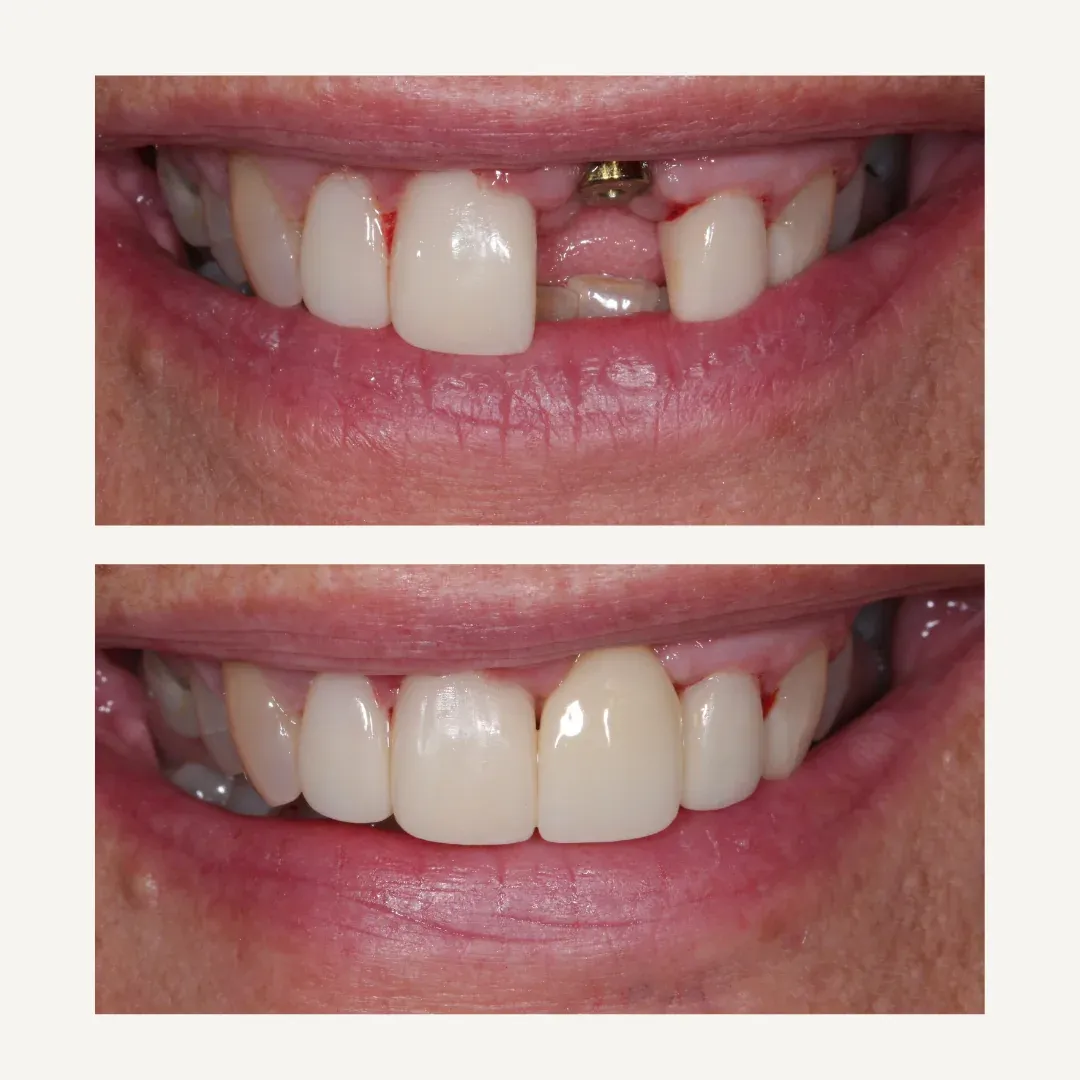
Implant Crowns
Original example from the existing Contour Dentistry gallery. Individual results vary.
Your Next Step
Let’s Talk About Your Smile
Personal dental care in Cornelius, with clear answers before treatment begins.