
Thoughtful changes to your smile
Dental Veneers in Cornelius, NC
A chipped edge, an uneven tooth shape or persistent discoloration can make you consider changing your smile. Dental veneers cover the front surfaces of selected teeth to change their appearance. The right plan starts with understanding what you want to change and whether your teeth can support treatment.
Contour Dentistry offers porcelain and composite resin veneers at our Cornelius office for patients from the surrounding Lake Norman communities. A consultation gives you a chance to compare materials, discuss alternatives and understand the long-term commitment before deciding. Call 704-896-6160 to request a visit.
What veneers can change
Veneers are thin coverings bonded to the visible front of a tooth. They may help disguise stains, small chips, modest gaps or uneven shapes. Treatment can involve a single tooth or several teeth, depending on your concerns and the condition of your smile.
A veneer changes appearance; it does not make an unhealthy tooth healthy. It covers less of a tooth than a crown, which surrounds the tooth. Pain, significant damage or an active cavity needs an assessment before a cosmetic covering is considered.
Are veneers appropriate for your teeth?
The evaluation considers your teeth and gums, the enamel available for bonding and how your upper and lower teeth meet. Decay and gum disease need treatment first. Tell us about sensitivity, past dental work and any clenching or grinding, even if your main concern is cosmetic.
Grinding and a deep overbite can put veneers at risk, so they may make another approach more suitable. A night guard may be discussed when appropriate, but an appliance does not automatically make everyone a candidate.
Your goals also matter. We can discuss the shade and shape you prefer, what a veneer can realistically change and how much enamel preparation would be involved. You should understand the alternatives and maintenance needs before committing to treatment.
Comparing porcelain and composite resin
Porcelain veneers are custom-made shells. Treatment usually includes tooth preparation and impressions, followed by laboratory fabrication and a separate placement visit. Porcelain generally resists staining and wear better than composite resin, but it can still chip or break and usually has a higher initial cost.
Composite veneers use tooth-colored resin shaped directly on the prepared tooth. The material is hardened with a curing light, then finished and polished. Composite may require less enamel removal and can sometimes be completed in one treatment visit. It is generally less expensive and easier to repair, but is less resistant to staining and wear.
The best choice depends on the changes you need, your bite and your willingness to maintain or replace the restoration over time. The amount of preparation and number of visits are individualized, not determined by material alone.
When a different cosmetic option may fit better
Veneers are not the only way to address a cosmetic concern. If tooth color is your main concern, ask whether whitening could meet your goals without covering the tooth. For a small chip or limited shape change, cosmetic bonding may be an option to compare with a more extensive veneer plan.
A crown may be considered when a tooth needs more coverage than a veneer provides. We will explain whether your concern is mainly about appearance or also involves tooth health and function. Choosing the least extensive suitable treatment is a useful part of that conversation.
Protecting veneers and the teeth beneath them
Brush twice daily with fluoride toothpaste and clean between your teeth every day. Keep regular dental visits so the condition of your teeth, gums and veneers can be checked. Cavities can still develop around or beneath a veneer.
Avoid chewing ice, biting fingernails or using your teeth to open packaging. Take care with very hard foods, and ask about protection if you grind your teeth or play sports. Staining depends partly on the veneer material; discuss your habits and care needs rather than assuming all veneers respond the same way.
It may take a few days to adjust to the new surfaces. Let the office know if your bite feels uneven, discomfort persists or a veneer chips or loosens. Do not use household glue to reattach a veneer.
Veneer cost and payment planning
Your estimate depends on the number of teeth treated, the material selected, the complexity of preparation and any dental care needed beforehand. Ask what the estimate includes, such as laboratory work, placement and follow-up. Future repair or replacement is also worth considering when comparing options.
Veneers are generally considered cosmetic, so dental insurance may not cover them unless treatment is deemed medically necessary. Confirm your particular benefits with both the office and your insurer; coverage should not be assumed.
Before proceeding, ask the team about current payment and financing options and the terms that apply to you. A consultation and individualized estimate are more useful than a general per-tooth price that may not reflect your needs.
What to Expect
What to expect during veneer treatment
Discuss your goals and assess your teeth
We review the concerns you want to address and evaluate tooth health, gums and bite. If other dental care is needed first, that becomes part of the plan. You can compare materials, alternatives, costs and expected visits before deciding.
Plan the appearance and prepare the teeth
Shade and shape are discussed before placement. Enamel may need to be removed to make space and support bonding. The amount depends on the selected treatment; enamel removal cannot be undone. Local anesthetic may be used during preparation.
Create and place the veneers
For porcelain, impressions are used to make custom veneers in a dental laboratory. Their fit and appearance are checked before bonding. For composite, resin is shaped on the teeth, light-cured and polished. Your actual appointment sequence will be explained in advance.
Check your bite and review care
The fit and bite are checked, and you receive care instructions suited to your treatment. Contact the office if your bite does not feel right as you adjust. Ongoing dental visits remain important after placement.
Your Questions, Answered
Can veneers be removed so my teeth go back to how they were?
When enamel is removed, treatment is not reversible: that enamel does not grow back. A prepared tooth will need continued restoration care, and a veneer may eventually need repair or replacement. Discuss the amount of preparation and less extensive alternatives before treatment.
Do all of my front teeth need veneers?
No. The number depends on which teeth concern you and how their shade and shape relate to neighboring teeth. A single tooth may be considered, while other plans involve several teeth. There is no standard number that fits every smile.
Will getting veneers hurt?
Local anesthetic may be used for tooth preparation. Some people experience mild gum or jaw soreness afterward. Tell the team about existing sensitivity or concerns before treatment, and contact the office if discomfort persists or your bite feels uneven.
How long will my veneers last?
Veneers are not lifetime restorations. Their service life varies with the material, your bite, grinding habits, oral hygiene and damage over time. Porcelain generally resists wear better than composite, but either type may need repair or replacement. No specific lifespan can be guaranteed.
Can I still get a cavity on a tooth with a veneer?
Yes. A veneer does not protect the entire tooth from decay. Daily brushing with fluoride toothpaste, cleaning between teeth and regular dental care help protect the natural tooth around and beneath the restoration.
What should I do if a veneer becomes loose or falls off?
Contact Contour Dentistry at 704-896-6160 for guidance and an evaluation. Do not try to glue it back on yourself. Avoid biting hard foods with that tooth while you wait for advice; the dentist needs to assess both the veneer and the tooth before deciding on repair or replacement.
Examples from the Practice Gallery
Original images and treatment labels are preserved. Results vary; patient-release review remains a pre-launch requirement.
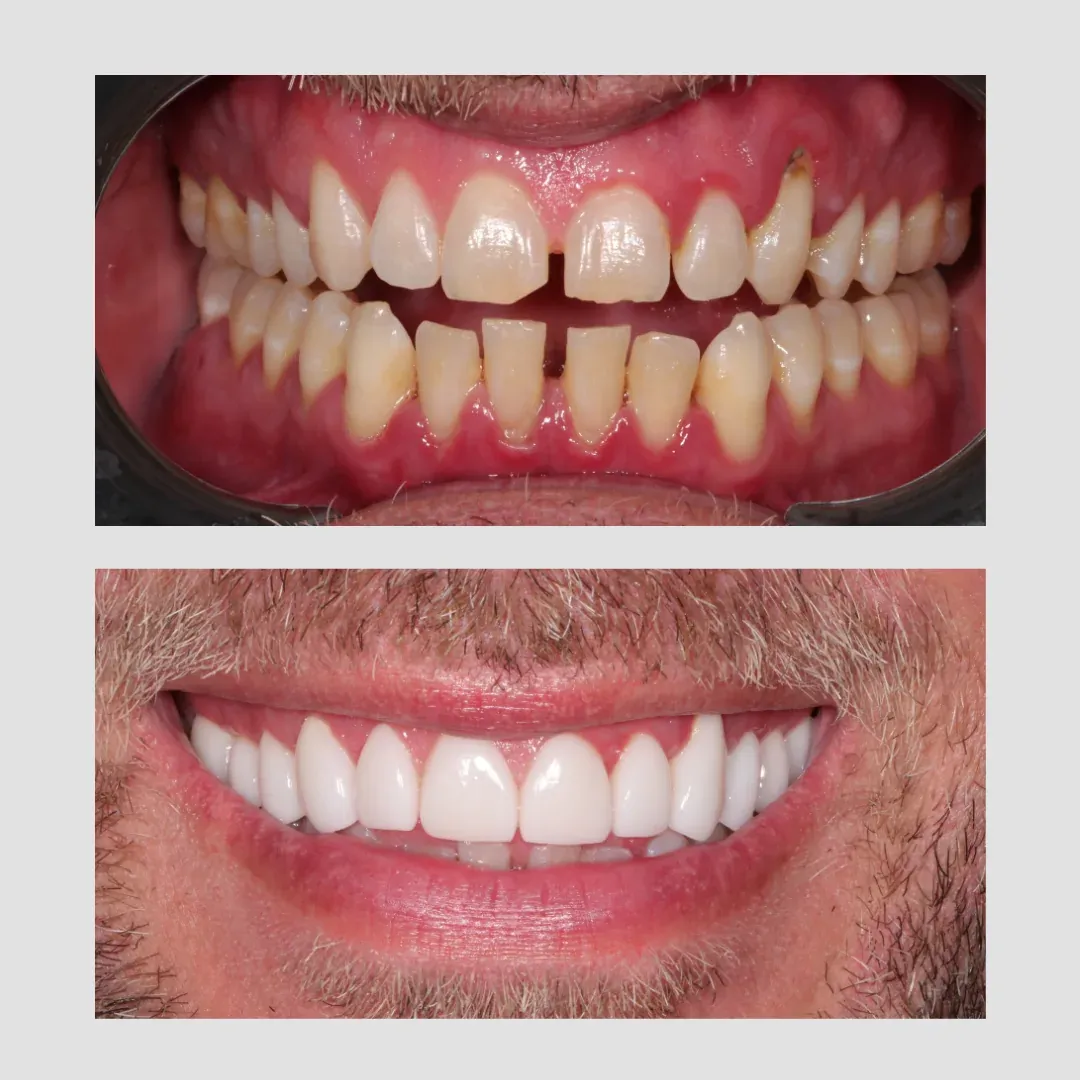
Dental Veneers
Original example from the existing Contour Dentistry gallery. Individual results vary.
Your Next Step
Let’s Talk About Your Smile
Personal dental care in Cornelius, with clear answers before treatment begins.